News
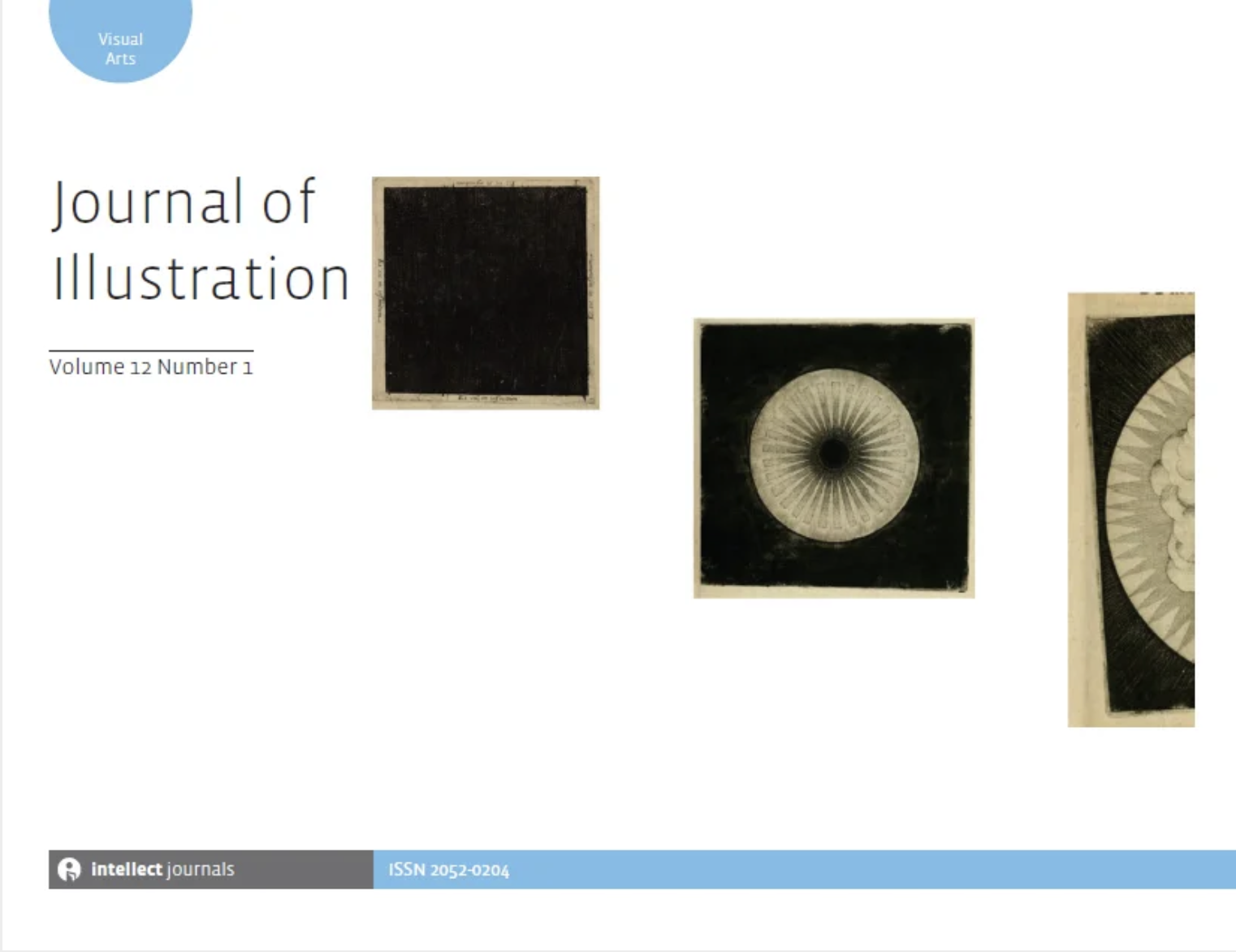
Forthcoming special edition of the Journal of Illustration
The forthcoming volume of the Journal of Illustration, responding to Illustration & Heritage: Sharing Histories to Draw Out Futures, will be published in two issues, in June 2026 and November 2026. The issue editors are Dr Rachel Emily Taylor and Dr Amy Goodwin.
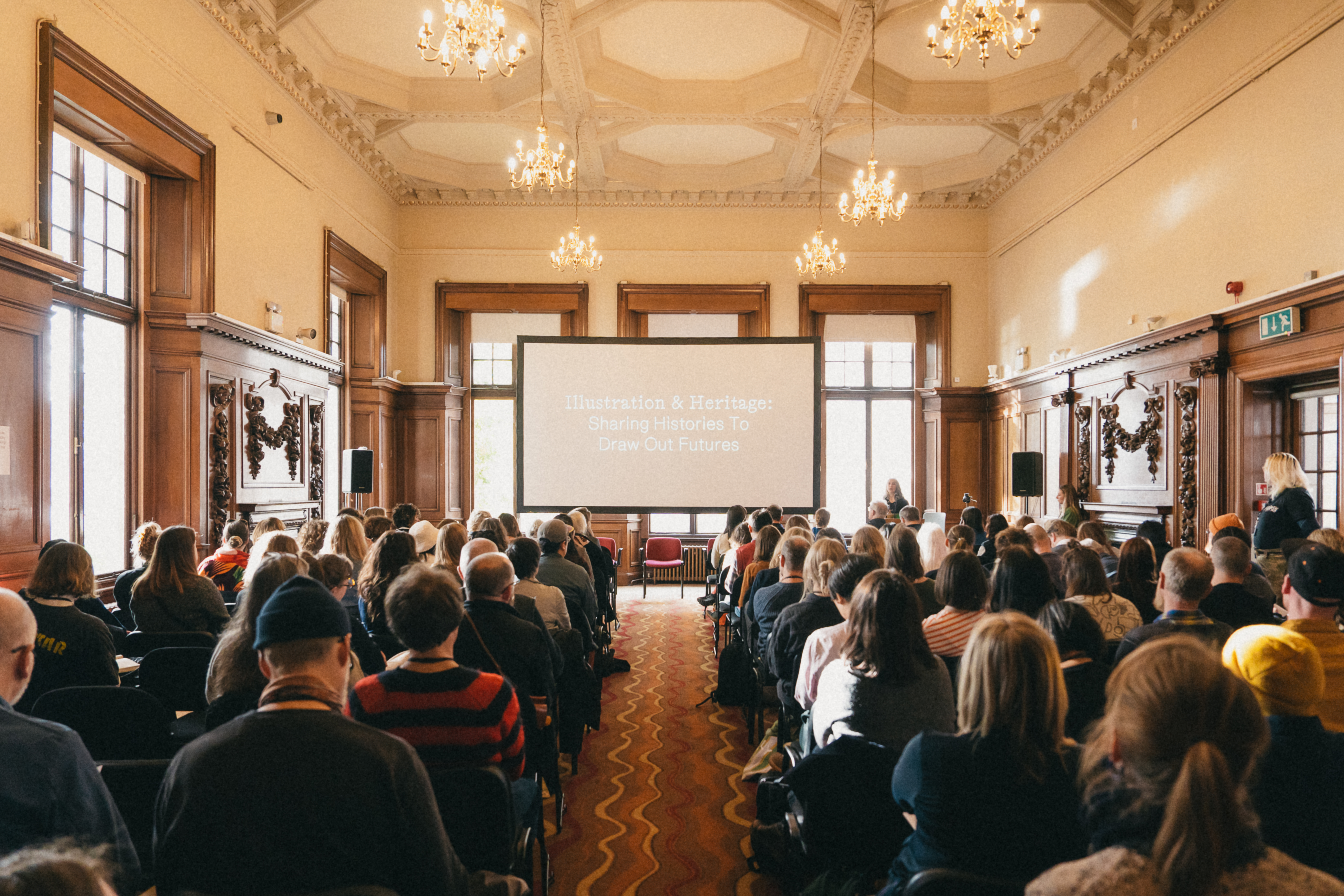
Reflections on the Symposium
The 14th International Illustration Research Symposium, organised by the Illustration Programme at Camberwell College of Arts, University of the Arts London (UAL), which took place over two days in late November 2024 at Chelsea College of Arts, UAL, set out to explore the relationship between heritage and illustration. The framework for establishing the nature of this relationship came from the book Illustration and Heritage (Bloomsbury, 2024), written by symposium organiser Dr Rachel Emily Taylor in continuation of her PhD titled Heritage as Process (Sheffield Hallam University, 2018), which encouraged us to resist separating, comparing, or appending heritage from or to illustration, which could only reinforce unhelpful distinctions between the practices. Instead, the approach was integrated, overlapping, mutual, contextualised.
In our call for papers, we offered open and discursive prompts in the hopes that we would bring speakers from seemingly disparate practitioners and disciplines together. We asked, in what ways can contemporary illustrators participate in historical narratives and ‘give voice’ to people and communities through their work? How are historical relics, places, and events represented through illustrative processes? How do researchers and heritage practitioners utilise the practices, research methods, and processes of illustration? How do illustrative processes—and the shared languages of categorising, curating, conserving, and communicating heritage[1]—bring illustration into the realms of archaeology, museology, curation, and other heritage practices? Do illustrators who engage with heritage-making as part of their practice communicate and reflect what Stuart Hall described as a ‘collective social memory’?[2] And, critically, who should be making the images that shape the future histories of cultures and identities?
The responses to these questions, and the many, many more that emerged during the symposium, quickly revealed the superficial closeness between the processes and subjects of heritage and those of illustration. Both disciplines are defined by the tangible and the intangible aspects of their practice—the images and objects that emerge from each, but also the narratives, traditions, folklore, and rituals represented by such artefacts and how they are made. Neither heritage nor illustration is defined by medium and, for both, it is the ongoing action of heritage making or illustrating that is as valued and significant as any outcome. Beyond the interplay between the practices—clear ideas such as ‘heritage can illustrate’ and ‘illustration can “preserve” the past’, etc—we found something much more interesting to present and discuss: when we speak about illustration and heritage together, we speak about the kinds of behaviours, impulses, urgencies, and subjectivities that lead us to represent and re-present the past; we speak about resistance, plurality, memory, ventriloquy, empathy, and sympathy as part of that presentation. To understand heritage and illustration, we need to think and speak about a kind of practice that is defined by movement and evolution.
Across the two days, keynote speakers, panellists, and members of the audience described specific processes of movement and evolution as remaking, translating, improvising, deconstructing, speculating, shifting, and encountering. Such processes are imperative, we heard, when we are presented with artefacts that claim to represent a people, place, or time, and may embody tradition and convention, which, as a keynote speaker, the designer Chris Lee, noted, are not neutral or universal. What’s more, we can use heritage and illustration as processes of movement and evolution to understand the connections between things, ideas, and moments in time, as well as how such connections are made and why. Illustrator Yeni Kim, another keynote, shared how connecting things makes them accessible, encourages engagement, and facilitates participation.
We also learned that the potential forms illustration and heritage might take can also lose shape, and, at some point, be reformed to become something else, again, and again. This is illustration and heritage as ‘again-making’, a way of knowing what something is or was, ‘a way of making it behave or mean differently—producing new knowledge and understanding’.[3] Keynote Dr Dan Hicks, Professor of Contemporary Archaeology at the University of Oxford and curator at the Pitt Rivers Museum in Oxford, for example, demonstrated the transformational potential of using illustration in heritage work, which, at its most basic, allows us to turn objects into images that can be studied and meaningfully compared. Such ideas were helpful when the discussions on each day shifted to expose received notions of illustration—challenging or refining them through the lenses of movement and evolution. Illustration as an act of illumination, for example, lost shape and was reformed when the subjectivity of illustration and heritage was raised. We were reminded—by Yeni—that a source of light also casts a shadow, and that the process of illumination can also obscure or ignore important elements.
As happens in such spaces, speakers and their audiences formulate careful statements and throwaway comments that chime and challenge each other, many important points were made and unmade, and the event otherwise proved how productive and vital and interesting the relationship between illustration and heritage is. The panels—with names like ‘architecture’ and ‘archives’, ‘materiality’ and ‘voice’, ‘learning’ and ‘institution’, and more—were meeting grounds less concerned with their distinguishing titles than the meaningful set of potentials that emerged from within, between, and across them. When illustration was placed in the context of heritage, we considered the potential of illustration as intervention and as indictment; illustration as an attempt at empathy and as a sympathetic process; illustration as a process of visual listening and as an intellectual visual act. With heritage in the context of illustration, heritage was considered as authority and as authorship; heritage as place, as absence, as fragmentation. We returned again and again to the potential of both heritage and illustration as active processes.
What arose as the most critical point from the symposium was that such active processes cannot be undertaken alone. The ways of describing who was involved in the production of illustration and heritage projects varied—stakeholders, collaborators, communities, ancestors, etc—but what was consistent was how no one presented their work as an individual, operating alone, even when it was their own heritage they explored, in deeply personal contexts, and with no affiliation with a museum or similar ‘official’ space. In the same breath, it was clear from the presentations and discussions that neither illustration or heritage—as noun or verb—can or should be considered passive or exclusive. Which leads to the final critical thread to be drawn from this event, and as a through-line from the PhD and book that preceded it: a lot of the work has been done from within and with institutions in this field—museums, archives, etc—or otherwise found its public through presentation in institutions such as the University of the Arts London. In the introduction to the day, Rachel stated that it was now necessary to hear more voices, and to achieve some kind of plurality and multi-perspectives on the prompts and questions that were the foundations of the symposium. Meaningfully, this means that the gatekeeping practices and issues of access that were highlighted as part of many research projects and discussions were still taking place within the exclusive context of an institution with a limited audience. It’s important now, then, that the potentials and active processes for illustration and heritage become accessible without the institution, with as many voices as possible, to allow for continued movement and evolution of both practices.
May 2025.
[1] Harrison, Rodney (2005) ‘Beyond “Natural” and “Cultural” Heritage: Toward an Ontological Politics of Heritage in the Age of Anthropocene’, Heritage & Society, 8(1), 24–42.
[2] Hall, Stuart (1999) ‘Whose Heritage? Un-settling the Heritage, Re-imaging the Post-Nation’, Third Text, 13(49), 3–13.
[3] Briggs, Kate (2017) This Little Art (London: Fitzcarraldo Editions), 230.